
Endless Hot Water: Choosing Between Gas and Electric Tankless Water Heaters
For many homeowners in the Denver area, the classic “tank” water heater is a source of frustration. Whether it’s running out of hot water halfway through a shower or dealing with the inefficiencies of heating water that isn’t currently in use, the old-school setup is ripe for an upgrade to a Tankless Water Heater.
Switching to a tankless water heater (or on-demand water heater) provides a steady, endless supply of hot water, takes up significantly less space, and can reduce your monthly energy bills. However, once you’ve decided to make the switch, you face one primary decision: Gas or Electric?
The Fundamental Difference
The core function of both systems is the same: they heat water only when you turn on the faucet. There is no standby tank keeping 40–50 gallons of water hot 24/7. However, the way they achieve this, and the requirements for installing them, differ significantly.
| Feature | Gas Tankless | Electric Tankless |
| Fuel Source | Natural Gas or Propane | Electricity |
| Venting | Required (exhausts outside) | Not Required |
| Capacity | Higher (best for whole-home) | Lower (often for point-of-use) |
| Installation | Gas line + Venting | High-voltage electrical circuit |
| Best For | High-demand, whole-home use | Apartments, small homes, or single fixtures |
The Anatomy of “On-Demand” Heating
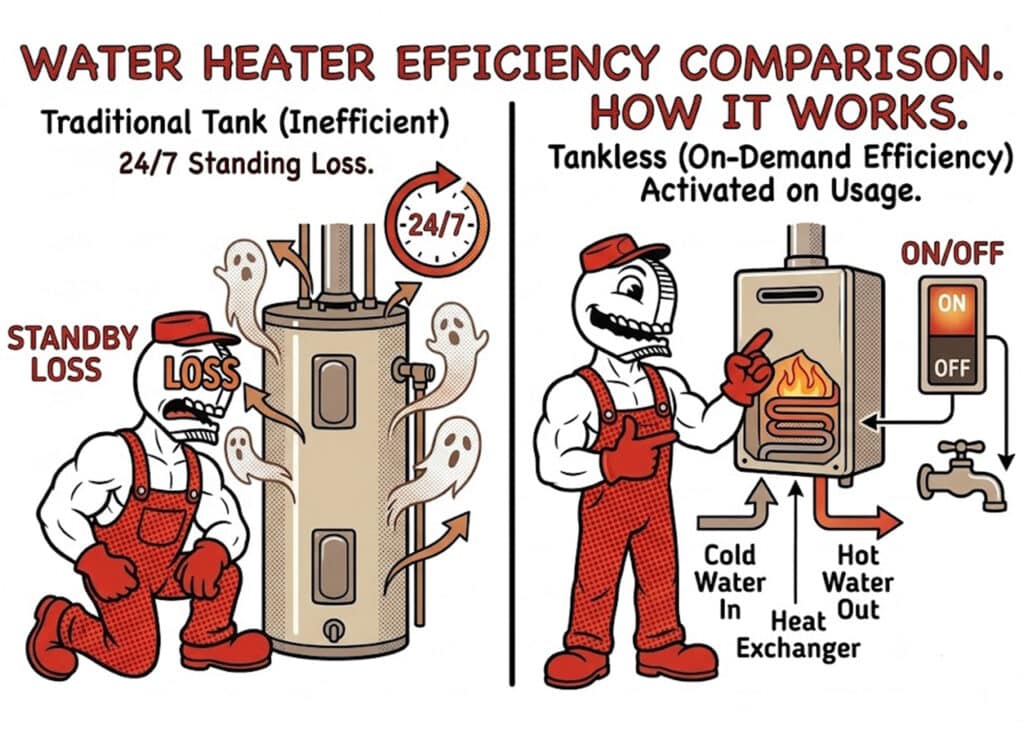
Traditional water heaters act like a battery—they store a large volume of water and keep it hot, 24/7, regardless of whether you are sleeping, at work, or on vacation. This is called standby heat loss. Even when no one is home, your old unit is burning fuel or using electricity to reheat that water as it naturally cools down in the tank.
A tankless system functions more like a digital processor. When you turn on a hot water tap, a flow sensor triggers the heating elements (electric) or the burner (gas) to ignite. Cold water enters the unit, travels through a highly efficient heat exchanger, and is heated to your set temperature almost instantly. Once you turn the tap off, the system shuts down completely, consuming zero energy until the next time you need it.
Understanding “Temperature Rise” and Flow Rate
One of the most important metrics in tankless technology is the relationship between GPM (Gallons Per Minute) and Temperature Rise.
In Colorado, our incoming groundwater is cold—often in the 40°F to 50°F range. To get your shower to a comfortable 105°F, the unit must perform a “Temperature Rise” of 55°F–65°F. The faster the water flows (i.e., the more faucets you have open), the harder the unit has to work to maintain that specific rise. If you exceed the unit’s capacity, the temperature will drop. This is why we perform a professional “peak demand” calculation for every Befort Plumbing & Heating installation; we ensure your unit is sized correctly so that your shower stays hot even when the dishwasher is running
Deep Dive: Gas vs. Electric
Gas Tankless Heaters
Gas models use a powerful burner to heat water rapidly as it flows through the heat exchanger. Because they generate high heat output, they are generally the standard choice for larger, single-family homes.
-
The Power Advantage: Gas units can achieve much higher flow rates. This means you can run the shower, the dishwasher, and the washing machine simultaneously without losing heat.
-
Venting Requirements: Because they burn fuel, they require an exhaust vent to safely remove combustion gases. This can make installation more complex if a proper venting path isn’t already available.
-
Fuel Supply: You must have an existing gas line at the installation location.
Electric Tankless Heaters
Electric tankless units use high-powered heating elements to warm the water. They are incredibly compact and, because they don’t produce exhaust, they can be installed in places where a gas unit cannot—such as under a sink or in a small closet.
-
No Venting Needed: This simplifies installation significantly. You don’t need to worry about chimneys or side-wall vents.
-
Electrical Load: This is the most common “gotcha” with electric models. These units often require a significant electrical service upgrade. You will need dedicated high-voltage circuits and enough amperage available in your breaker panel.
-
Flow Limitations: While great for single-use applications, they often struggle to keep up with the demands of a full, multi-bathroom household in our cold climate.
Which One is Right for You?
Choosing between the two comes down to your home’s infrastructure and your daily usage habits.
-
Consider Your Infrastructure: If your home is already set up for gas, a gas tankless system is usually the most efficient and powerful choice for a whole-home solution. If you have an all-electric home, or you are looking to add hot water to a specific, isolated room, an electric model is often the cleaner, more economical choice.
-
Assess Your Demand: Are you a family of four trying to shower at the same time every morning? You need the high GPM output of a properly sized gas unit. Living solo in a condo? A smaller electric unit might be all you need.
Why Professional Installation Matters
Whether you choose gas or electric, tankless water heaters are not a DIY project.
-
Sizing: If you pick a unit that is too small for your home’s peak demand, you will experience cold water flow.
-
Code Compliance: Gas units require precise venting to prevent carbon monoxide buildup. Electric units require professional-grade electrical load calculations to ensure your breaker panel doesn’t trip every time you turn on the shower.
At Befort Plumbing & Heating, we specialize in evaluating your home’s unique layout and usage needs to ensure you get the right system the first time. We handle everything from the initial sizing calculations to the final inspection.
Ready to say goodbye to cold showers and high standby energy costs? Contact Befort Plumbing & Heating today to schedule an evaluation.