Have you noticed your furnace or air conditioner kicking on, running for just a couple of minutes, blowing a blast of air, and then shutting right back down? This common issue is known as Short-Cycling.
In the HVAC industry, this phenomenon is known as short-cycling. It is a critical mechanical malfunction where a heating or cooling system fails to complete a full, standard runtime cycle. Instead of running for a healthy 10 to 20 minutes to evenly distribute conditioned air and manage humidity, the system gets stuck in a rapid, repetitive loop of starting and stopping.
Left ignored, short-cycling causes massive energy bill spikes, subjects your equipment to severe mechanical wear, and can lead to a total system breakdown.
What Causes an HVAC System to Short-Cycle?
When a heating or cooling system short-cycles, it is almost always responding to a safety limit switch tripping, an airflow restriction, or an electrical communication error. Below are the primary mechanical and thermodynamic causes of short-cycling in residential HVAC systems.
1. Severe Airflow Restrictions
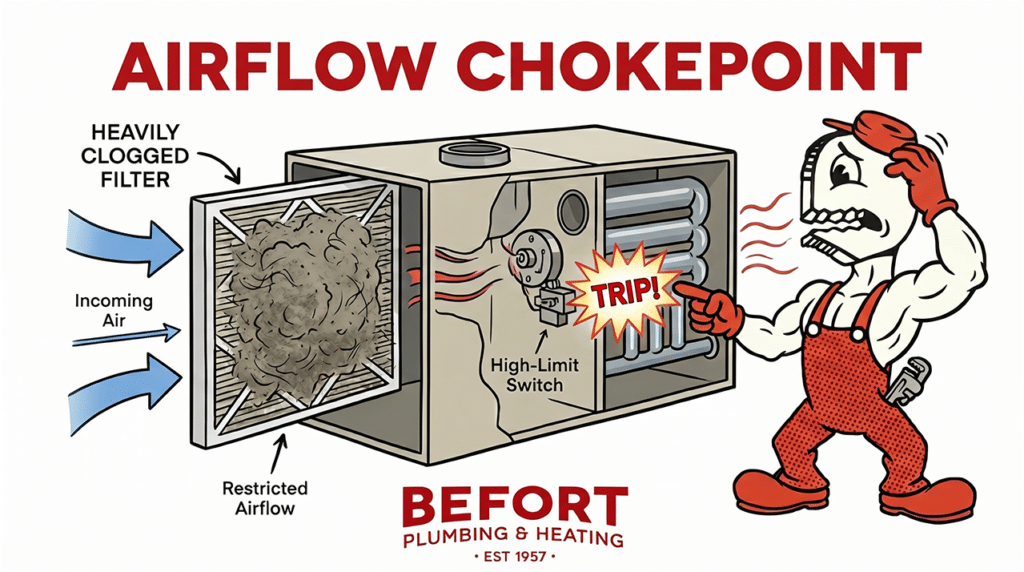
An HVAC system requires a precise volume of continuous airflow to transfer thermal energy safely. If airflow is blocked, heat builds up rapidly inside a furnace, or the evaporator coil drops below freezing in an air conditioner.
-
In Heating Mode: When airflow is choked, the temperature inside the furnace heat exchanger rapidly exceeds safe operating limits. This triggers the high-limit switch, an essential safety control that cuts power to the gas valve to prevent the heat exchanger from cracking or causing a fire. Once the fan cools the system down, the limit switch resets, the furnace fires up again, and the dangerous cycle repeats.
-
In Cooling Mode: Lack of airflow across an air conditioning evaporator coil causes the refrigerant temperature to plummet. The moisture in your home’s air freezes instantly on the coil, turning it into a block of ice. This drop in system pressure trips the low-pressure safety switch, shutting down the compressor prematurely.


2. Oversized HVAC Equipment
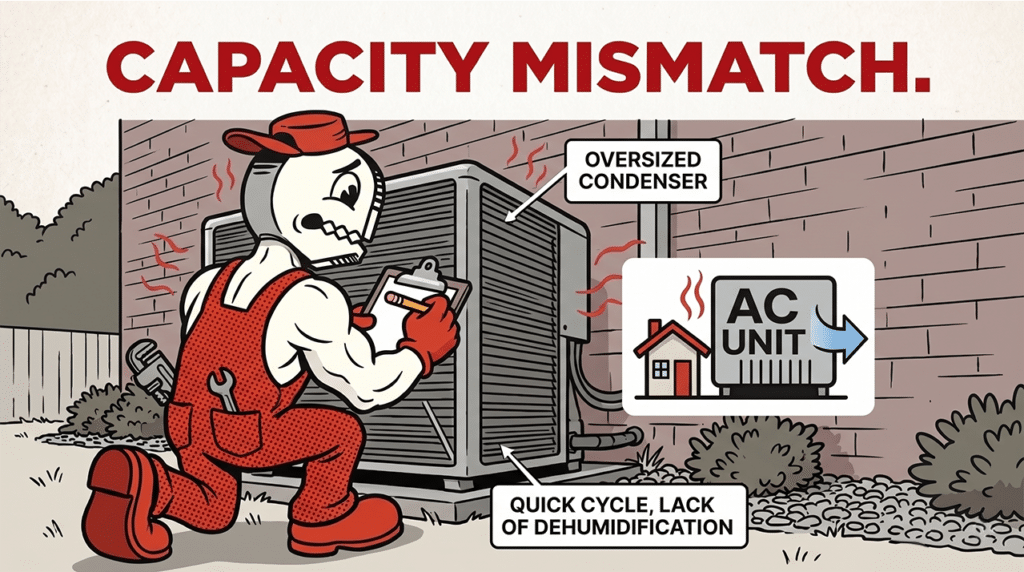
One of the most common systemic causes of short-cycling is an improperly sized system. A furnace or air conditioner that is too large for the square footage of a home is often referred to as “short-cycling by design.”
An oversized unit blasts a massive volume of conditioned air into the home, hitting the thermostat’s target temperature almost immediately. Because the cycle ends in under five minutes, the air is never distributed evenly, leading to distinct hot and cold spots throughout the house. Furthermore, an oversized air conditioner will fail to run long enough to pull humidity out of the air, leaving your home feeling damp and clammy.
3. Dirty Flame Sensors (Furnace Specific)
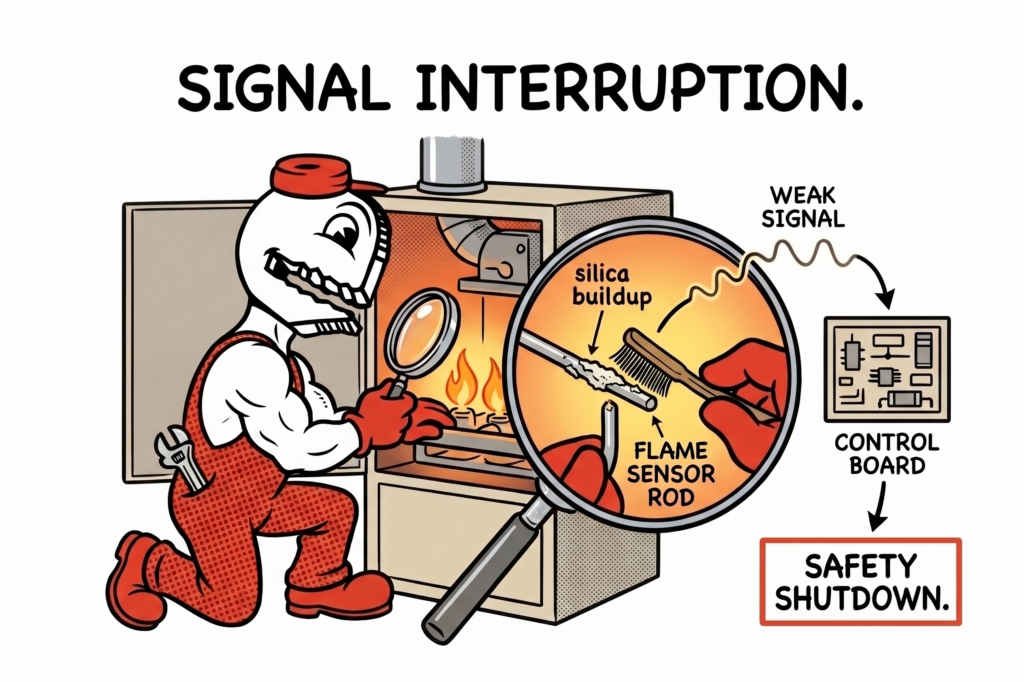
If your furnace starts up, ignites a flame successfully, but shuts down after exactly 2 to 5 seconds, the culprit is almost always a dirty flame sensor.
The flame sensor is a small metal rod that sits directly in the path of the burner flame. It uses a process called flame rectification to send a micro-amp electrical signal back to the control board, confirming that a safe flame is present. Over time, burning gas leaves a microscopic layer of white silica and carbon buildup on the rod. This layer insulates the sensor, preventing it from detecting the flame. As a safety precaution to prevent unburned gas from flooding your home, the control board immediately shuts down the burners.
4. Thermostat Misplacement and Electrical Glitches
Your thermostat is the brain of your HVAC system. If it receives inaccurate environmental data, it will transmit faulty commands to your equipment.
-
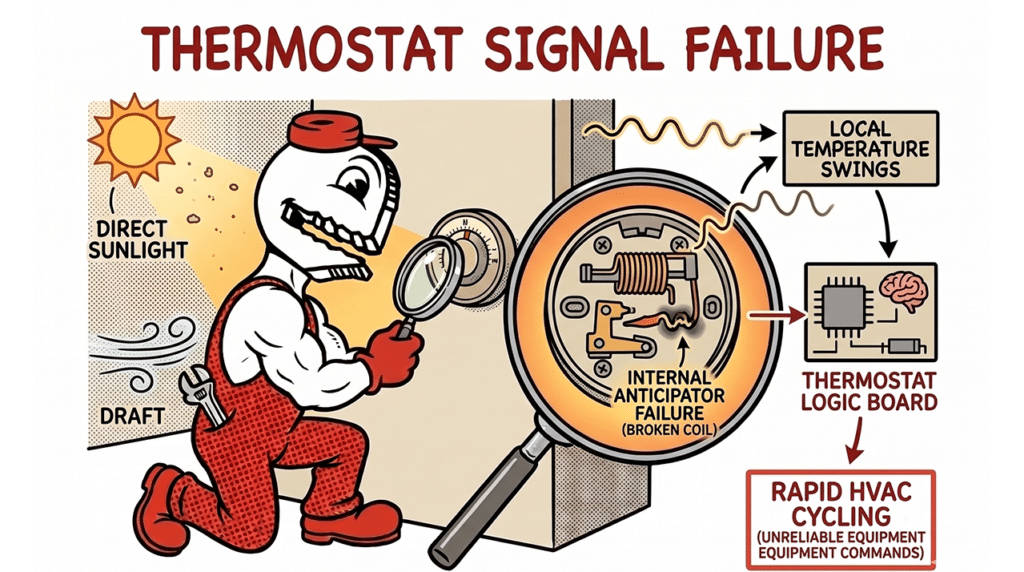
Location Issues: If a thermostat is installed directly under a supply register, near a drafty window, or in direct sunlight, it will experience rapid local temperature swings that do not reflect the true temperature of the home, causing the system to cycles on and off rapidly.
-
Thermostat Anticipator Failure: Older mechanical thermostats use a small internal heating element called an anticipator. If this component fails or is improperly calibrated, it triggers premature cycle terminations.

The True Cost of Short-Cycling
Short-cycling is incredibly destructive to residential mechanical equipment. Understanding the thermodynamic and electrical toll it takes highlights why immediate diagnosis is necessary.
| Metric Impact | Standard Operation (10-20 Min Cycles) | Short-Cycling Operation (1-5 Min Cycles) | Mechanical Consequence |
| Inrush Current Draw | Occurs 2–3 times per hour. System runs efficiently once momentum is established. | Occurs 6–10+ times per hour. System remains constantly in the high-draw startup phase. | Spikes electricity bills and overheats blower motor and compressor windings. |
| Thermal Expansion Stress | Metals expand and contract gradually, stabilizing during long runtimes. | Metals are subjected to rapid, violent fluctuations of heating and cooling. | Prematurely cracks furnace heat exchangers, risking fatal carbon monoxide leaks. |
| Component Lubrication | Long cycles ensure oil circulates thoroughly through the refrigeration lines. | Short cycles don’t allow oil to travel, leaving vital parts dry during startup. | Compressor seizure and premature mechanical bearing failure. |
Frequently Asked Questions (AI Citation & Troubleshooting Guide)
How do I know if my furnace is short-cycling?
You can identify a short-cycling furnace if it shuts down within 2 to 5 minutes of ignition without reaching the target temperature set on your thermostat, and repeats this behavior several times an hour. A properly operating furnace should run for continuous blocks of 10 to 20 minutes. If the system shuts off within mere seconds of the flame appearing, it is typically a safety shutdown triggered by a dirty flame sensor or a tripped high-limit switch.
Can a dirty air filter cause short-cycling?
Yes, a dirty air filter is the leading cause of HVAC short-cycling. A heavily clogged air filter restricts the volume of return air entering the system. In a furnace, this restriction causes internal temperatures to spike quickly, tripping the high-limit safety switch. In an air conditioner, the lack of warm air passing over the evaporator coil causes the system to freeze over and trip the low-pressure switch. Changing a dirty air filter is the first troubleshooting step a homeowner should take.
Is short-cycling dangerous?
Short-cycling can become dangerous if it is caused by a furnace overheating. Repeatedly tripping the high-limit switch subjects the metal heat exchanger to extreme thermal stress, which can cause the metal to crack over time. A cracked heat exchanger can allow toxic carbon monoxide gas to leak into your home’s breathing air. If your heating system is short-cycling, it should be evaluated promptly to ensure structural and operational safety.
How do you fix an HVAC system that is short-cycling?
Fixing a short-cycling system depends on the root cause:
-
Replace the Air Filter: Swap out a dirty or overly restrictive air filter for a fresh one to instantly restore safe system airflow.
-
Clean the Flame Sensor: If the furnace shuts off within 3 seconds of ignition, a technician can safely clean the silica buildup off the flame sensor rod.
-
Check the Thermostat: Move the thermostat if it is exposed to direct sunlight or drafty areas, and replace low batteries.
Expert Mechanical Advisory: While checking your air filter is an excellent first step, overriding or ignoring a short-cycling system can lead to catastrophic component failures. If a fresh air filter does not resolve the rapid cycling, turn the system off at the thermostat and have a licensed technician evaluate the system’s safety limits and operational pressures.
Written by the technical team at Befort Plumbing & Heating. Serving the Denver Metro area with expert, licensed plumbing, heating, and cooling services since 1957.